Introduction
Robotics systems are becoming increasingly complex, requiring modular software architectures capable of handling real-time communication, sensor integration, autonomous navigation, and distributed computing.
ROS2 (Robot Operating System 2) is the next-generation robotics middleware designed to simplify robotic software development while improving scalability, reliability, and performance.
ROS2 enables developers to build scalable and modular robotics systems using a distributed communication framework.
What is ROS2?
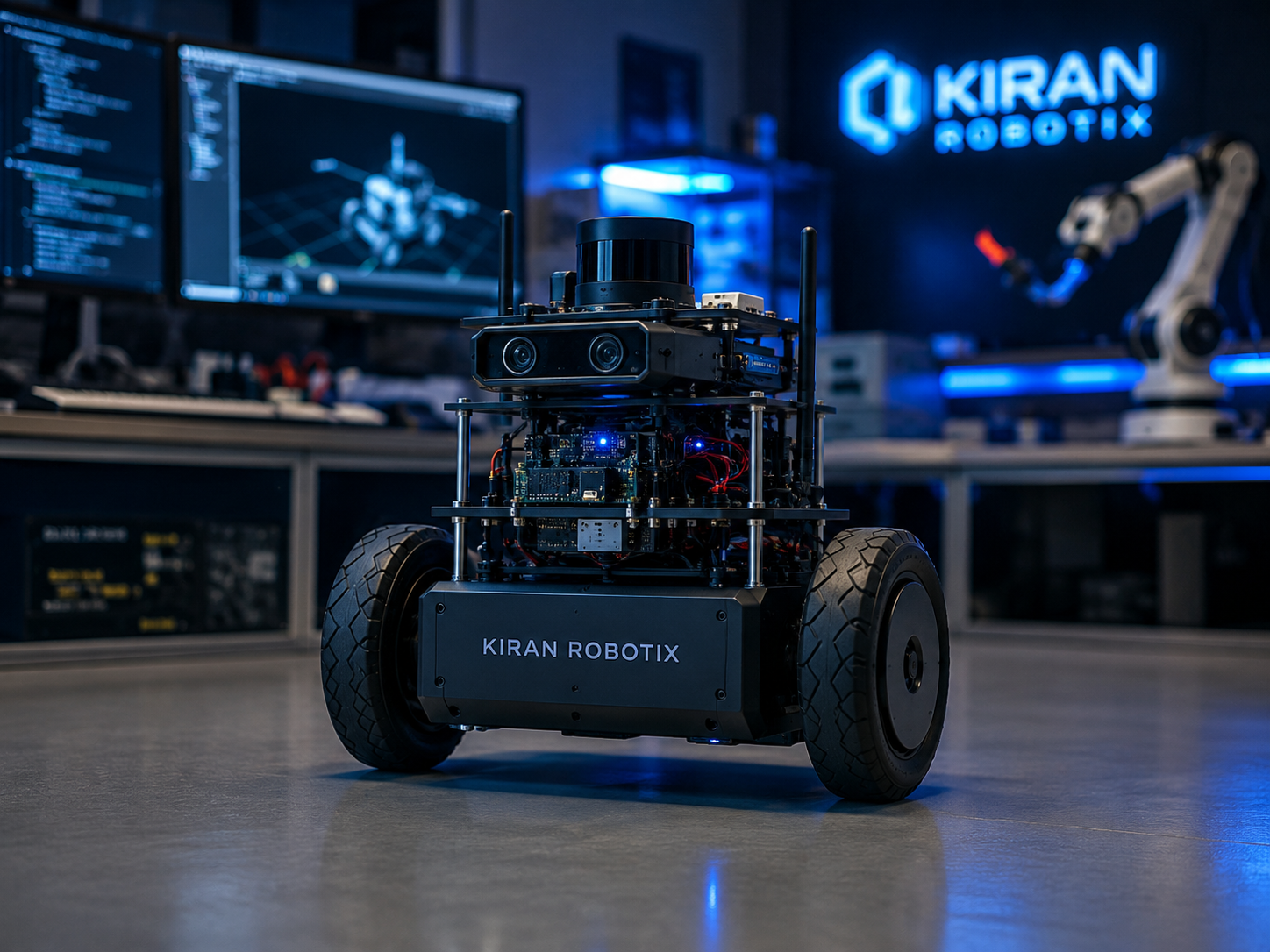
ROS2 is an open-source robotics framework that provides communication infrastructure, hardware abstraction, package management, visualization tools, and development libraries for robotics applications.
Unlike traditional monolithic robotics systems, ROS2 enables modular development using distributed nodes that communicate through topics, services, and actions.
ROS2 was developed as the successor to ROS1 to address:
- Real-time communication support
- Better security mechanisms
- Multi-platform compatibility
- DDS-based communication architecture
- Improved scalability
Understanding ROS2 Architecture
ROS2 applications are built using multiple distributed nodes communicating through a publish-subscribe model.
Each node is responsible for a specific functionality such as:
- Sensor processing
- Motion control
- Navigation
- Localization
- Computer vision
Nodes exchange information using:
- Topics
- Services
- Actions
# Display active ROS2 topics

ros2 topic list
Installing ROS2
ROS2 can be installed on Ubuntu using official package repositories.
Example installation command:
sudo apt update

sudo apt install ros-humble-desktop
After installation, source the ROS2 environment:
source /opt/ros/humble/setup.bash
Node Communication
ROS2 nodes communicate using a distributed DDS-based architecture that allows scalable and reliable inter-process communication.
Example:
# Publish a string message

ros2 topic pub /robot_status std_msgs/String "data: Active"
Visualization tools such as:
- RViz2
- Gazebo
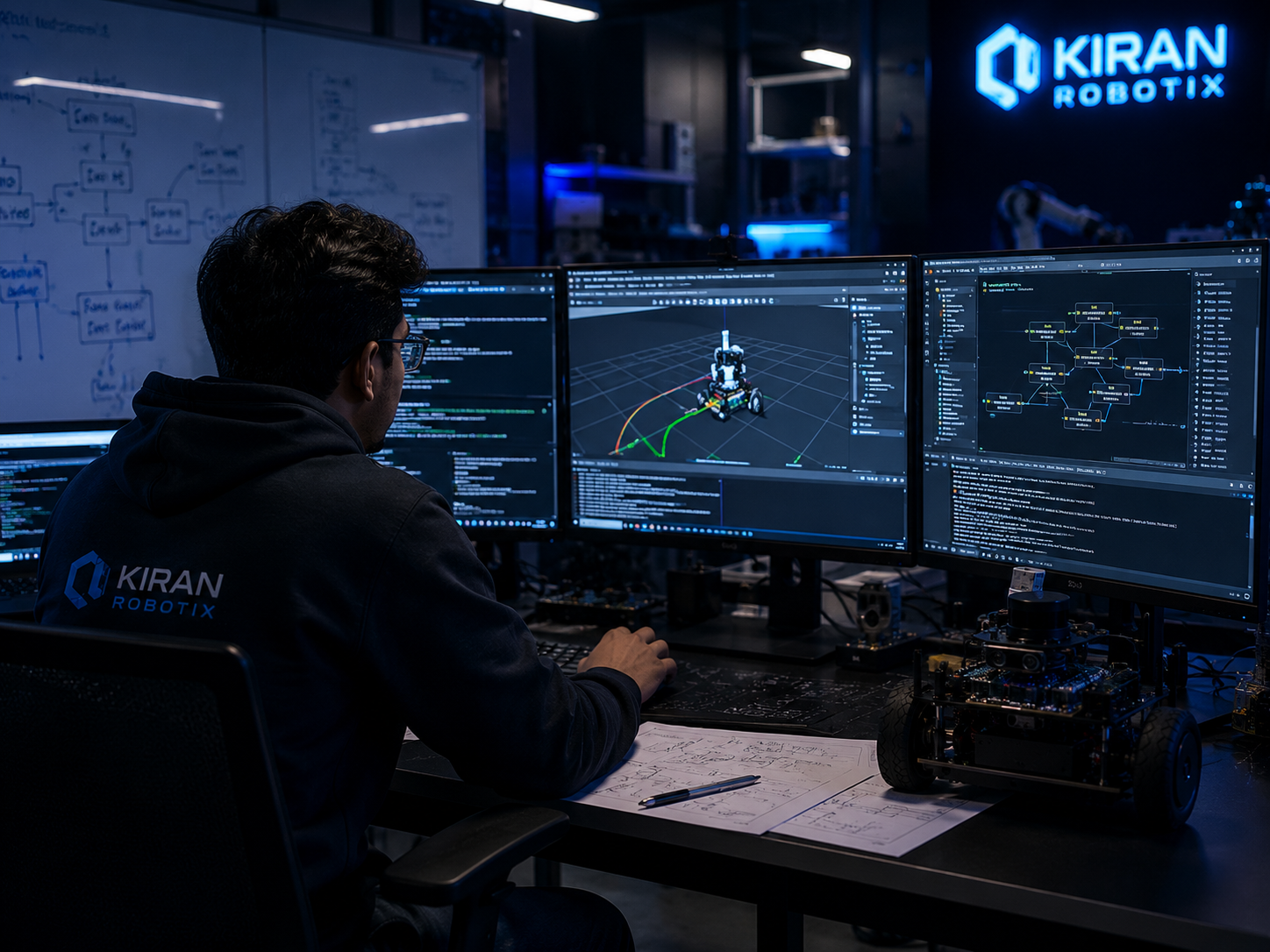
- rqt_graph
help developers debug and simulate robotics systems effectively.
Conclusion
ROS2 has become one of the most important frameworks in modern robotics development due to its modular architecture, scalability, and extensive ecosystem.
Whether you are building autonomous robots, industrial automation systems, or intelligent embedded platforms, ROS2 provides a robust foundation for scalable robotics software development.