Introduction
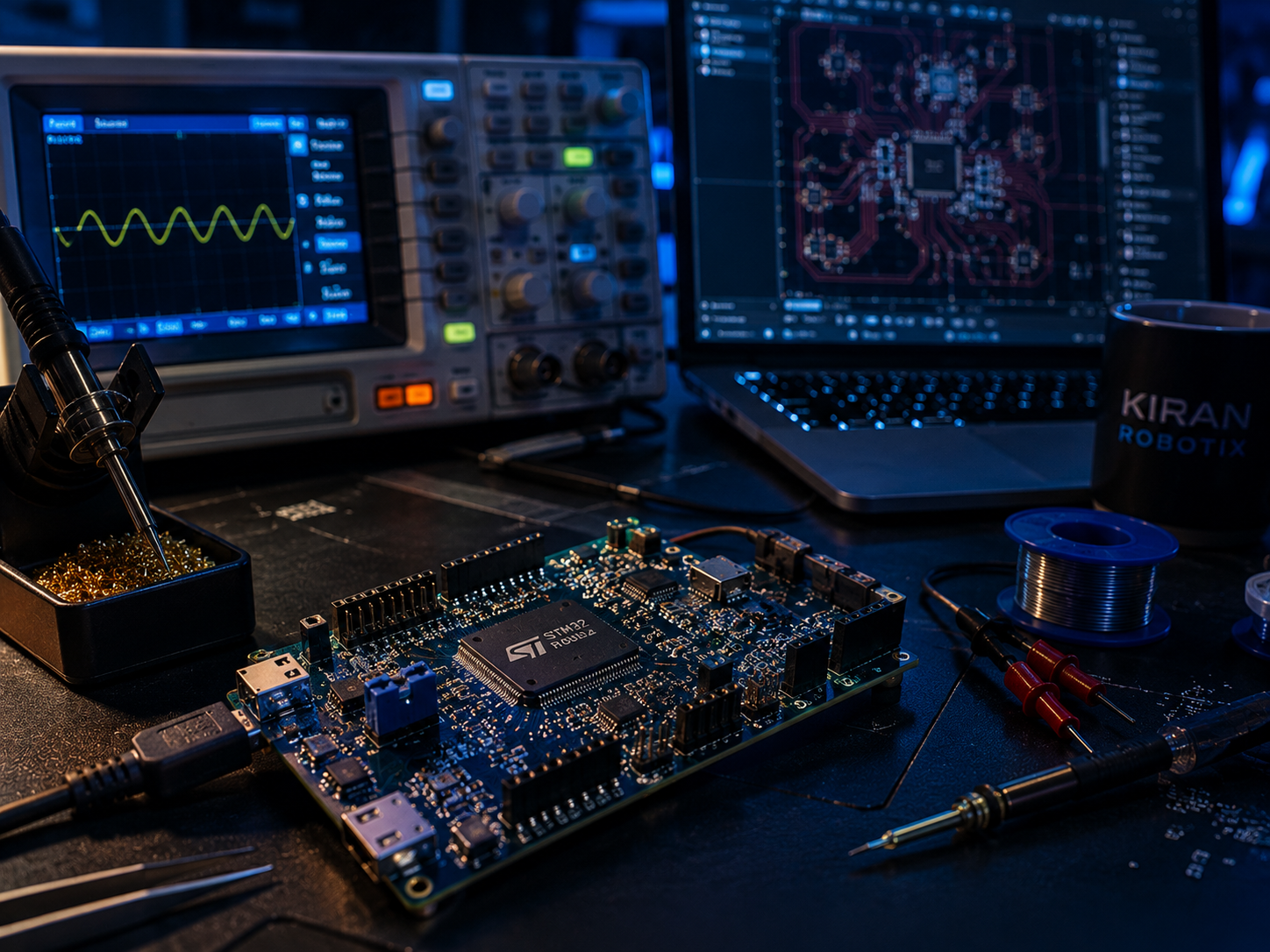
PCB design plays a critical role in robotics systems. From motor control and sensor integration to embedded communication and power management, a well-designed PCB directly impacts system reliability and performance.
Unlike general consumer electronics, robotics PCBs often operate in noisy electrical environments with high-current motors, wireless communication modules, and multiple sensor interfaces.
A robust PCB design can significantly improve the reliability, stability, and scalability of robotics systems.
Choosing the Right PCB Stackup
PCB stackup selection affects signal integrity, EMI performance, thermal management, and routing efficiency.
Common robotics PCB configurations include:
- 2-layer boards for simple embedded systems
- 4-layer boards for mixed-signal robotics systems
- Multi-layer boards for high-speed communication and AI hardware
A typical 4-layer stackup may include:
Top Layer     → Signal Routing
Inner Layer 1 → Ground Plane
Inner Layer 2 → Power Plane
Bottom Layer  → Signal Routing
Proper Grounding Techniques
Grounding is one of the most important aspects of robotics PCB design because motors and switching circuits generate significant electrical noise.
Best practices include:
- Using solid ground planes
- Separating analog and digital grounds when required
- Minimizing return path impedance
- Avoiding ground loops
Proper grounding reduces EMI issues and improves signal stability.
Signal Routing Considerations
Signal routing quality affects communication reliability, sensor accuracy, and high-speed data transmission.
Key recommendations:
- Keep high-speed traces short
- Use differential routing for CAN and USB
- Avoid sharp 90° trace bends
- Maintain proper spacing between noisy and sensitive signals
# Example Differential Pair

CAN_H  =========
CAN_L  =========
Power Distribution in Robotics
Robotics platforms often contain multiple voltage domains:
- Motor supply voltages
- Logic voltage rails
- Sensor power systems
- Communication modules
PCB layouts should:
- Use wide traces for high-current paths
- Include decoupling capacitors near ICs
- Minimize voltage drops
- Isolate noisy motor drivers from sensitive electronics
Conclusion
PCB design is a foundational component of reliable robotics engineering. Careful attention to grounding, routing, stackup selection, and power management can significantly improve system performance and long-term stability.
As robotics systems continue to evolve, high-quality PCB engineering will remain essential for embedded intelligence, autonomous navigation, and industrial automation platforms.